Insights · Silicon Valley Field Notes
The Model Generation: Silicon Valley Edition
When food was scarce, we fought hunger. Now it’s plentiful, we fight obesity and exercise to burn it off.
Intelligence used to be scarce too. Now it’s abundant, and we’re getting mentally obese. Keep your mind fit on purpose. “Mind gyms” are coming.
The first stage of the AI era is over. When the second stage will begin, nobody knows.
I recently read “The Model Generation” (《模型一代》), the long-form essay that went viral on Chinese social media with 100k+ reads, and it really resonated with me. I’ve been writing up my own notes from my time in Silicon Valley anyway, so the timing is perfect: here’s a response to “The Model Generation” from the other side of the Pacific, based on what I’ve seen and heard over here.
Bubble Wealth
A good chunk of “The Model Generation” is about the income gaps between classmates who took different paths: some earn ten times what others do, some a hundred times, and some have even made over a hundred million. Those stories of staggering wealth mostly play out in Silicon Valley—in Northern California, where I am right now.
And it’s true: wealth legends swirl around here every single day. Some 17-year-old just raised tens of millions; some company is valued at 100x; so-and-so’s company just got acquired and they went from working out of a stairwell to a big house; so-and-so just graduated and already bought a mansion… The stories never end. So even though people here are generally richer than people back across the ocean, they’re every bit as anxious.
If the pressure back in China is the rat race—what Chinese call neijuan, a giant steamroller of competition that flattens everyone into paper-thin cutouts—then here it’s one giant bubble. The bubble makes everyone feel light and floaty, a high like a drug, but it’s also like walking through fog, or chasing a mirage: you’re constantly torn between wanting more and fearing you’ll lose it all. I don’t think either state is very healthy.
Researchers at Harvard Business School surveyed more than 4,000 millionaires. They found that people with a net worth of $3 million to $7.9 million were no more satisfied with their lives than people with $1.5 million to $2.9 million. Only above $8 million (above $10 million in another sample) did happiness jump noticeably—and even then, only by a little.
In other words, say you already have a net worth of $1 million, and you decide, OK, I’m going to keep grinding and keep chasing big comp packages, and you spend half your life building that up to $3 or $4 million. Your life won’t actually look much different: you’ll probably still have a house in the South Bay, walk the dog on weekends, go out for French or Japanese food now and then, drive up to San Francisco or Half Moon Bay, or maybe fly out to Yellowstone. Beyond that, not much changes.
Take Alex (not his real name), a guy I know who works at a big tech company. He feels he can’t just keep bouncing around the $1.5-million-to-$7-something-million range—he needs a real leap, to break past $8 million. So what does he do? Quits his job and starts a company. And that’s when the anxiety kicks in. Startups are risky, and until the dust settles, you live in endless pain: you have to win over investors, win over co-founders, win over users; you need real revenue and a good-looking ARR number; you have to stay constantly on guard so your whole story doesn’t get swallowed by the next jump in what the big models can do; and you have to keep throwing marketing events around San Francisco so investors notice you.
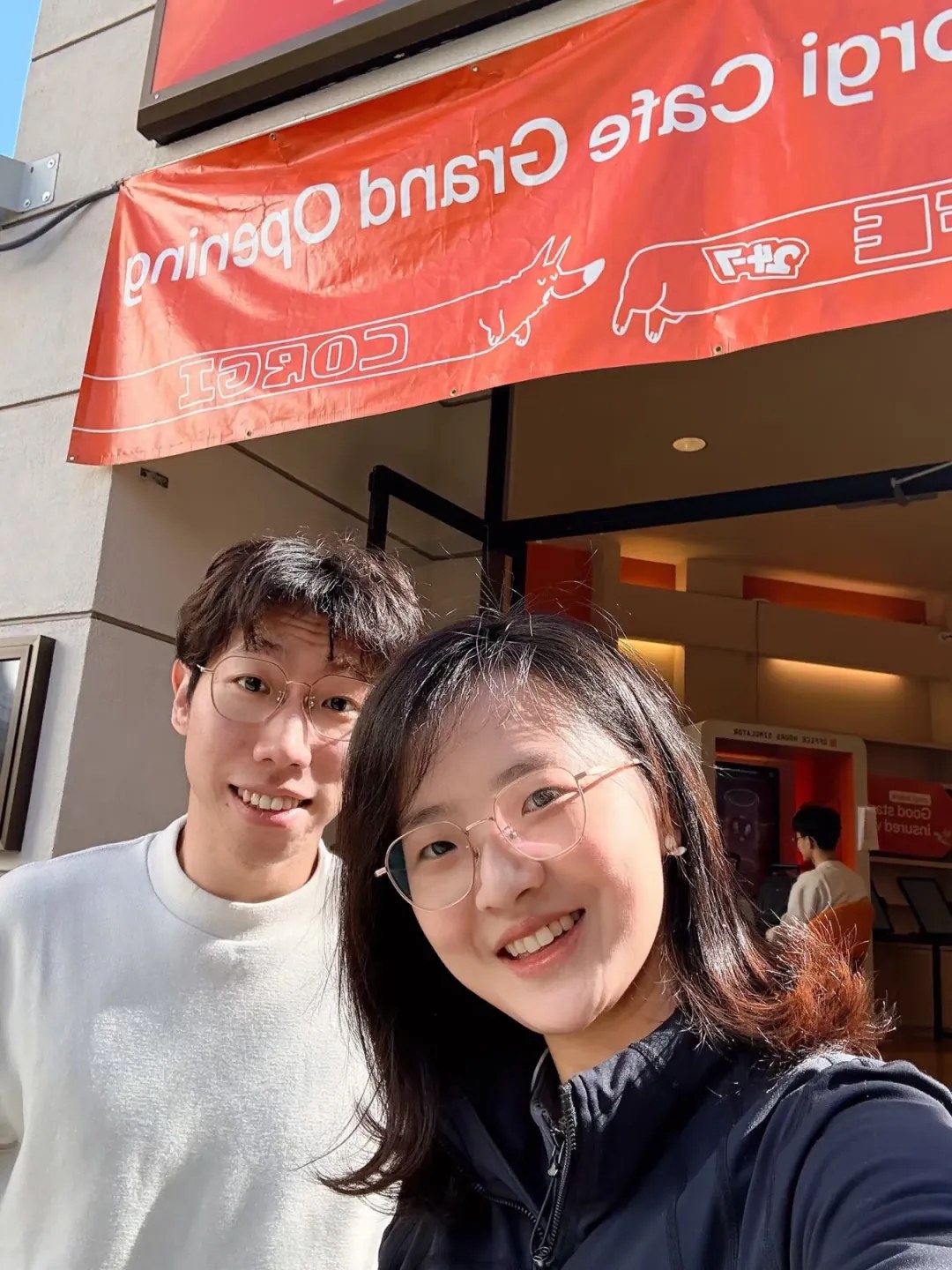
Take Corgi, for example. It started out as an insurance startup, and then it opened a 24-hour café on the ground floor of its San Francisco headquarters. Once the café took off, it launched a free shuttle bus looping around YC (the hottest startup incubator here), ferrying programmers who pull all-nighters. All of that got it a ton of attention, and it raised plenty of money too.
So a lot of the money here is really tied to attention. And you know, once you get hooked on attention, you can never shake it. You’ll spend your whole life riding its ups and downs, constantly anxious, and it’s honestly miserable. It’s really hard to be happy in San Francisco. If you’re the type who compares yourself to others, you’ll be running forever on the treadmill of comparison.
2. Same “LLM,” Wildly Different Paychecks
Same Stanford degree, but even if a law student lands at Biglaw (the top-tier U.S. law firms), first-year base salary is only about $220,000–$230,000. And these days Chinese students basically can’t get into Biglaw at all. After a grueling year of job hunting, they finally land at a small firm making around $100K a year—and the work is every bit as brutal as being a programmer at a big tech company. Meanwhile, senior engineers at big tech make several hundred thousand to over a million dollars a year, researchers at AI research labs make at least $1 million, and even regular engineers make over $200K.
The most absurd part? It’s the same “LLM”: people who build LLMs (large language models) start at $1 million; people who earn an LLM (the Master of Laws degree) get $100K. And one year of Stanford’s LL.M. costs nearly 1 million RMB in tuition and living expenses—insanely expensive. I honestly think it’s ridiculous. The return on that investment leaves me speechless.
The income gap here is enormous. The wealth is almost entirely concentrated in tech; other industries barely make any money, especially non-technical office jobs. Of course, I have tons of friends at Stanford, and I know plenty of them don’t actually live on what they earn—they’re in school just for the experience. I’ll leave it there; I’m too close to it.
Back to AI. AI really has made a lot of people rich overnight. Say you joined Anthropic at the start of last year, when it was valued at $61.5 billion. This week it’s going public on Nasdaq, and based on the offering price range, its market cap will be around $1.4 trillion—price it a little higher and it could hit $1.5 trillion. In just over a year, the valuation is up more than twentyfold. If you negotiated a generous option grant back then, you got rich overnight.
But places like Anthropic and OpenAI are actually pretty exhausting to work at, and you often hear that the culture isn’t great. Internally, they love talking to you about things like “AI might destroy humanity.” Anthropic’s seven co-founders have publicly pledged to give away 80% of their wealth, and the company has an employee stock-donation matching program—it’s voluntary, but reportedly about half the staff have signed up.
On top of that, all this overflowing wealth and froth comes with plenty of “add-on services”: Big Sis Amy’s matchmaking mixers, the hookup-party scene, and all kinds of paid companionship. Suddenly you feel like, wow, the doors of the world have swung wide open for you, and every kind of indulgence comes rushing in. But it’s a real test of character, and it doesn’t exactly help you build a stable, healthy life for the long haul.
3. Bubble Networking
Next, the “meeting the big names” thing the essay talks about: in San Francisco, meeting big names is ridiculously easy. Me, for example—I’ve met Thariq, who works on Claude Code; Garry Tan of YC; and the founder of Pika. I’ve basically checked all these famous people off my list. You, too, can spend your days surrounded by brilliant, accomplished people and nobody else. The founder you grab a coffee chat with today could very well raise $10 million tomorrow. Before I’d experienced it, I was super envious; but after two months here, I’ve found that this feeling is easy to come by, so it’s really no big deal.
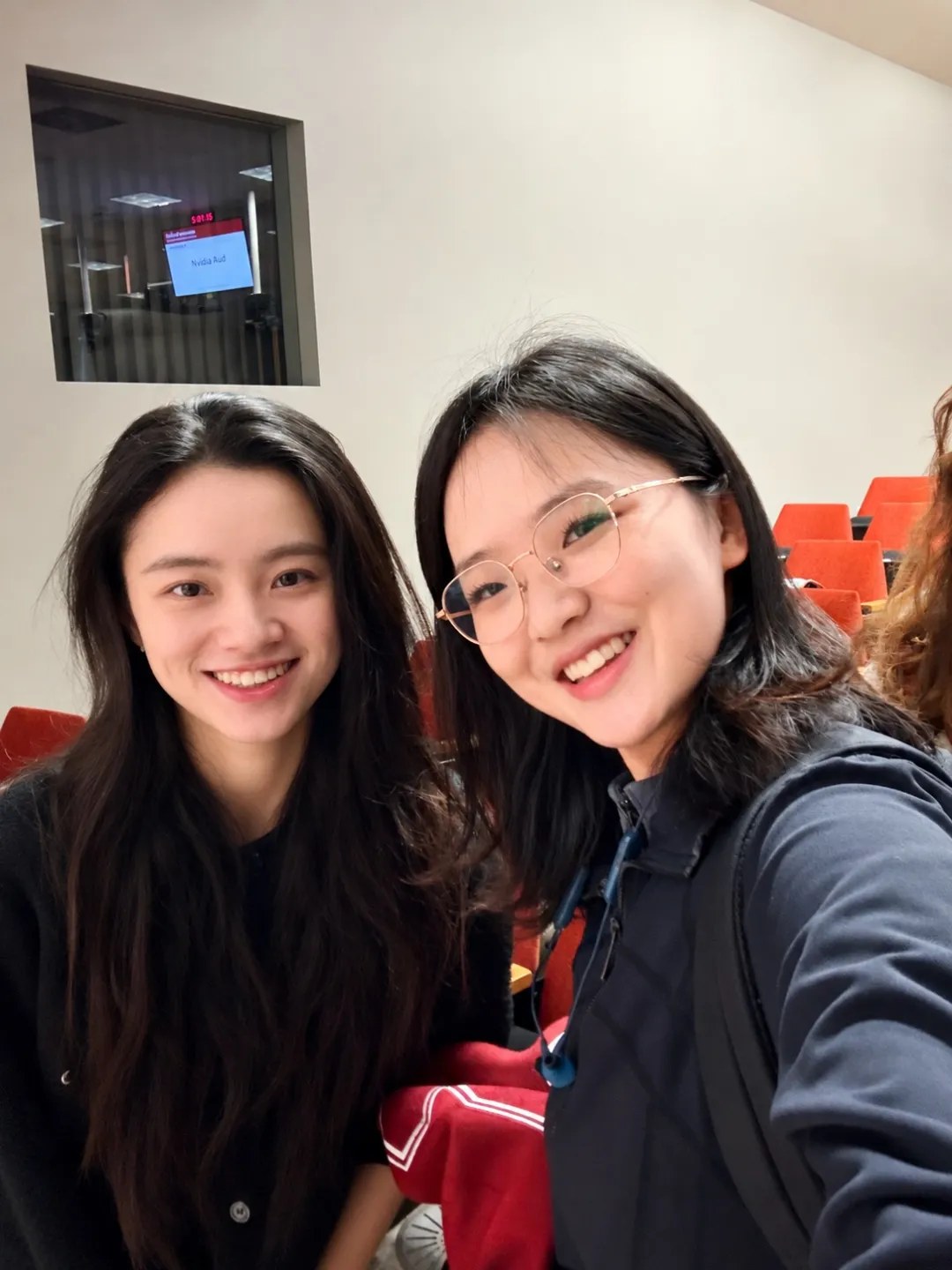
So I encourage anyone who sees this stuff through rose-tinted glasses to come to San Francisco and experience it for themselves. You’ll end up thinking, OK, it’s not that big a deal. Like in “The Model Generation”—chatting with investors, chatting with Zuckerberg, chatting with Lei Jun (Xiaomi’s founder)—you think it’s amazing, but really, it’s just fine. Honestly, in the end, what people look at is your actual work, your project.
The best network you can build here is actually people at roughly the same stage as you—say, other founders who are just starting out. There are a lot of hacker houses here. I visited a Taiwanese hacker house a while back, and the vibe was great: everyone talks about their products every day and acts as each other’s test users and beta testers; when someone raises a round, they announce it in the house and everyone has dinner together—one big happy family. A new idea comes up mid-conversation, and off someone goes to start another company. This ecosystem really is pretty good in San Francisco, and hacker houses like this have produced quite a few companies and founders who made it into YC, posted solid results, and built good products. People’s hearts are mostly in the right place.
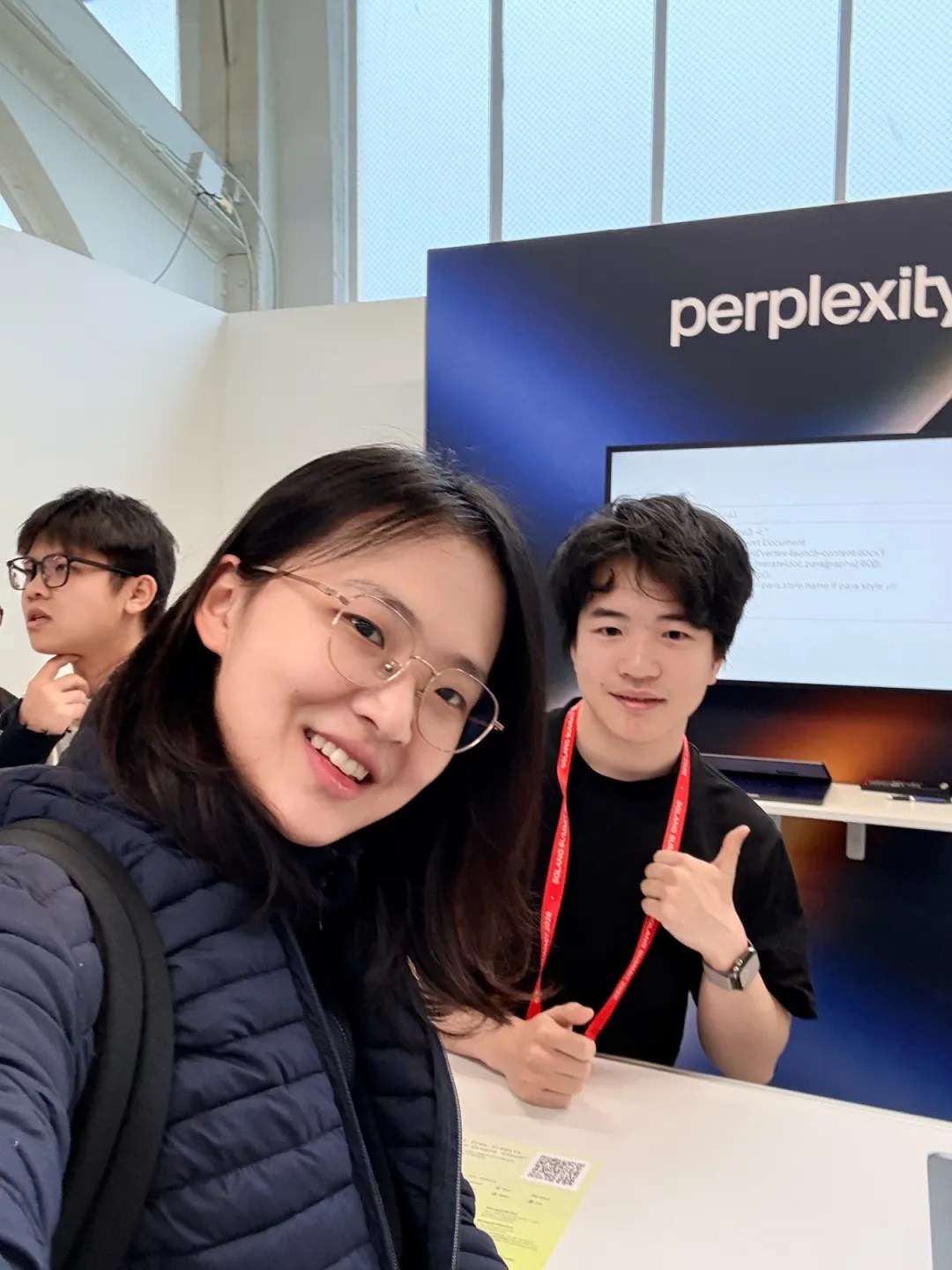
One upside of being in San Francisco, I’ve come to think, is that you can find founders who are in it for the right reasons, whereas back in China some founders may just be out to cash in on investors. And precisely because the environment here is better, it lets you stay true to your intentions. Back home, sometimes people start out with the right intentions, but when they truly can’t survive anymore, they start going down the wrong path.
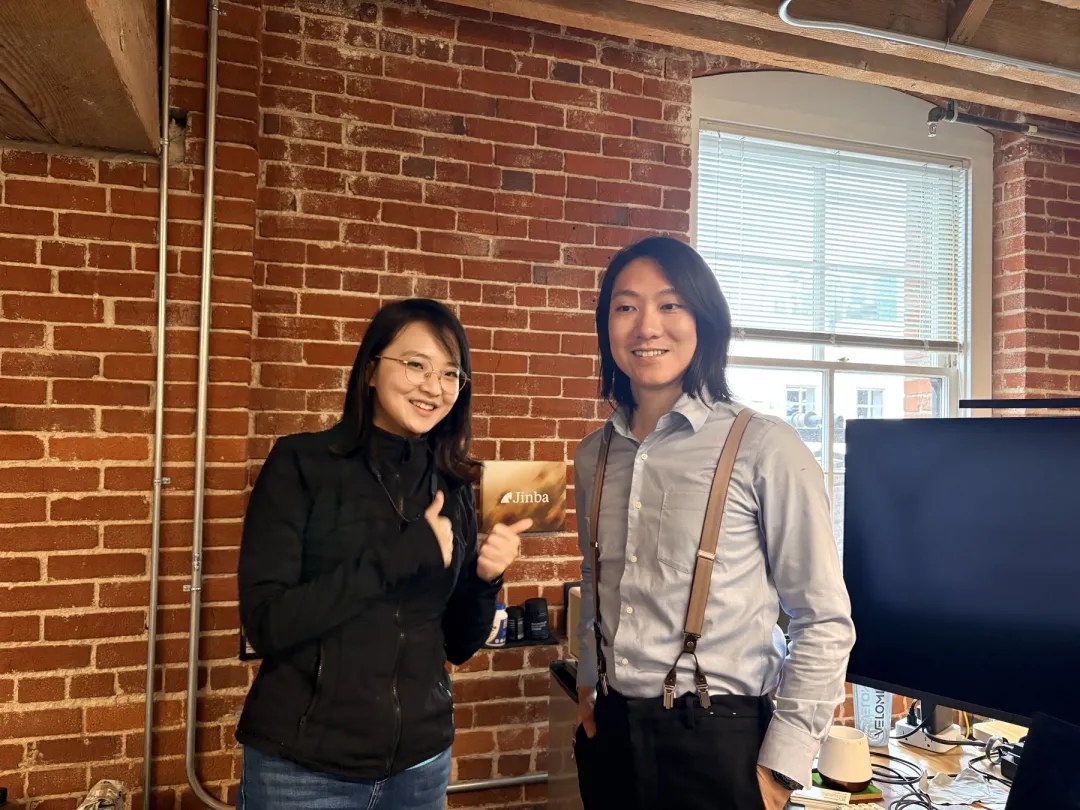
Of course, fundraising here has its own little tips and tricks. Take two classmates who both finished PhDs—let’s call them Edward and Ashley. Edward says, “OK, I’ll keep teaching,” and goes abroad, say to Europe or Australia. Ashley joins big tech—first a stint at Tesla, then OpenAI. When she leaves to start her own company, Tesla gives her tens of thousands of dollars, and OpenAI gives her tens of thousands too. In investment terms, that’s pocket change, but with those two big names vouching for her, it’s easy for her to land much bigger rounds—several million, tens of millions—in U.S. dollars, no less.
Ashley is really smart: she’s building to get acquired, not to IPO, because going public is way too exhausting. If you aim for an acquisition, you can basically cash out at 5x or 10x—a glamorous exit, an all-cash exit. So if you’re after fast wealth, starting a company here really can get you there, as long as you find a good angle: autonomous-driving data, world-model data, robotics data—data is especially lucrative; or building plugins, infra, or data connectors for Personal Agents works too.
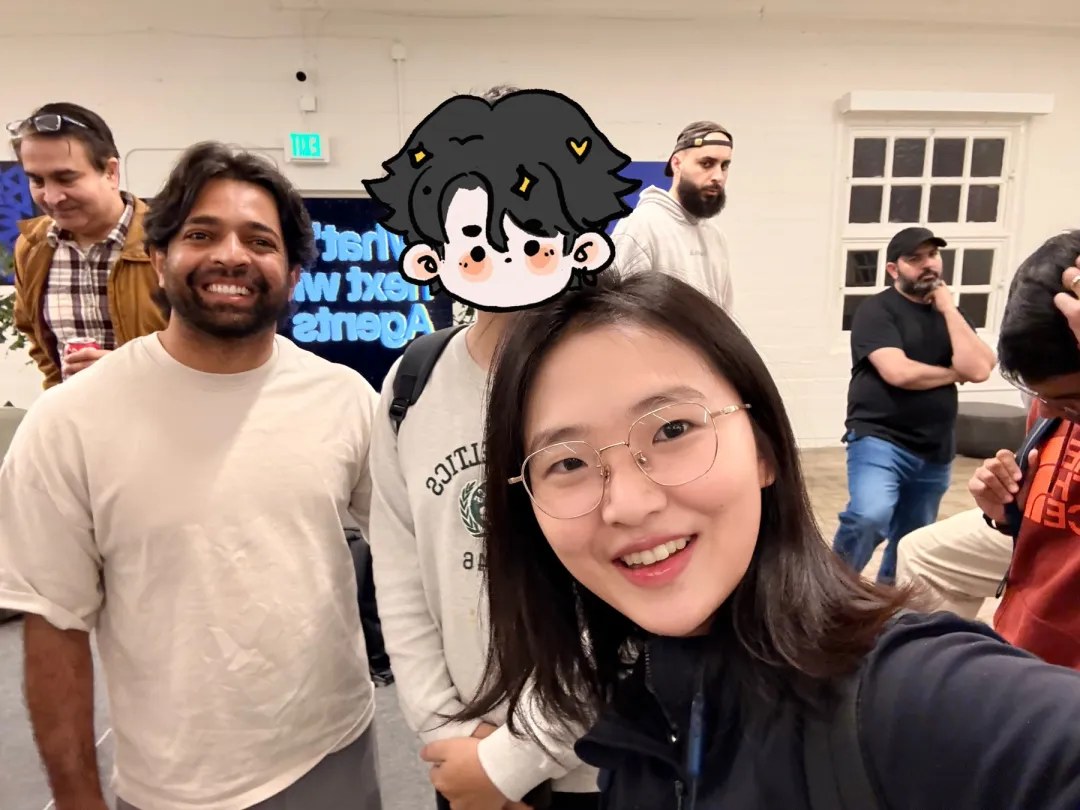
4. Bubble Emotions
The way I see it, the biggest opportunity of the AI era actually lies in people’s emotional problems. Our era is materially richer than any era before it, by far. Look at medieval Europe and the Black Death—not to mention us: a few decades ago, people in China couldn’t even get enough meat to eat. And yet, you’ll notice, people aren’t all that happy.
Take Mary (not her real name): undergrad at a second-tier university in China, master’s from an Ivy League school, an elite woman who shuttles between Palo Alto—the “center of the universe”—and San Francisco. She’s miserable, because she feels everyone around her is richer and luckier than she is. She feels she was born at the wrong time: Why did I go into finance? Why didn’t I go into AI? But even in AI, she’s not sure what she’d do. AI media doesn’t make money—look, even TechCrunch doesn’t make money; you’d have to work on models, be a researcher. She wanted to date a researcher, then found out researchers have paid companionship services and don’t need her. It’s as if she was ready to swallow her pride and drop the elite-graduate identity—what the Chinese internet calls “taking off the scholar’s long robe”—only to find that lane already packed, with people squeezed so tight they’re bent out of shape.
Then there’s immigration status. In September, the Department of Homeland Security proposed scrapping outright the 60-day grace period H-1B holders get after losing their jobs. The rule isn’t final yet, but it’s already hanging over everyone’s heads. If she gets laid off, she might have to pack up and leave right away—leave the country she’s spent years fighting to build a life in.
Or take Doris (not her real name). Her family is very well-off, so by rights she should be living the good life: her husband was at a big tech company and later started a company that makes good money, and she’s fairly well-known herself. She also pours a lot into her kids. In Palo Alto, the median home price is $3–4 million, and lots of those are old, run-down houses—never mind homes in good school districts; a private elementary school here runs $40,000–50,000 a year in tuition. When she wants a taste of life back home, the only option is Stanford Shopping Center, which has a bit of a Sanlitun feel (Beijing’s upscale shopping district)—pick up some luxury brands, that kind of thing. In the end, she finds the money’s spent and there doesn’t seem to be much left. The kids also have to do horseback riding and filmmaking, or they’ll have nothing to put on their Ivy League applications. You start to feel the money just paused with you for a moment—it never really belonged to you; you were only a stop along its way.
Finally, a student. Take Joe (not his real name), a Stanford student. In other people’s eyes: “You’re amazing—you beat every obstacle to get into Stanford, one of the best universities in the world, with the best computer science program. Your first job out of school could be junior engineer at big tech, making a few hundred thousand a year—and if you start a company, the sky’s the limit!” But he’s anxious too. He sees so many startup events every day, yet he can’t come up with an idea; he doesn’t know what the market needs, or how to use storytelling to win over investors. He wants a co-founder, but he’s not great at marketing: his Twitter following is still in the double digits, and the couple of posts he put on Xiaohongshu (RedNote) got throttled. He went to a few events, but everyone already has their own idea, and nobody wants to be his co-founder, because people with his background are a dime a dozen at Stanford. He doesn’t even know what kind of company to start.
He doesn’t want to do his homework, either—AI does all his homework. He’d like to work on his own open-source projects, but hardly anyone pays attention to them. He finds the investors in Palo Alto and San Francisco baffling; he has no idea what they’re even doing. He’s anxious every single day, feeling the opportunity is right there within reach, yet no matter what he does he can’t grab it, so he’s left floundering, lost amid all the noise.
So there’s a huge amount of spiritual practice going on here. Even in an American city like San Francisco, there are lots of Zen temples—Chinese-style, Japanese-style, and Indian ones too. People here have an enormous need for inner peace, because the frantic churn of wealth leaves everyone at a loss, and all they can do is go to a temple and find some joy in meditation.


5. The Curtain Falls on AI’s First Act
Let me say this first: in terms of understanding, I don’t think China is worlds apart from Silicon Valley—China is following pretty close on its heels. The first stage had a grand, glittering opening, roughly from the second half of 2025 to mid-2026: model capabilities kept leaping forward; Claude Code, the flagship product, kicked off a new era of Agents; OpenClaw (the one everyone calls “the lobster”) left a dazzling mark on the open-source community; Jensen Huang’s very first post on X, in July, was the open letter “Open Weights and American AI Leadership,” and a whole slew of companies rushed to sign on, which reflected a shared sense of mission. Then the ending was just as dramatic: on the night of the November midterms, Sanders called for a “national moratorium on new data centers,” and a group of Democratic lawmakers followed by publicly calling for a nationwide moratorium; a little over a week later, Jensen was taken down. The whole thing was incredibly dramatic, very cinematic—it really felt like this stage was over.
As for startups: San Francisco has hundreds of events every week, and 70% of them are about Agents; of those, another 70% are building for workplace or team use cases. Clearly people have run out of imagination. The remaining 30%, doing Personal Agents, are either having the Agent make phone and video calls for you, or plugging it into your own messaging apps—all of which the big companies have already built—or just slapping another wrapper on top with an anime-style avatar. How is this any different from going to a talk at the AI Origin Community in Haidian (Beijing’s tech hub) or at Shanghai’s Model Speed Space (a government-backed AI incubator)? It isn’t.
And that brings us to a big paradox. In theory, AI should be boosting consumption. If you compare it to the steam age or the electrical age, it really should drive consumption: in the steam age, more cloth got woven and more coal got mined, which naturally met needs that had gone unmet; with more electricity, people could have nightlife; and the information revolution even more so—with a global consumer network, you got e-commerce and global social networks.
But look at what demand AI is actually creating right now. Honestly, I don’t think it’s created even 1% of the demand the internet era did. Who’s paying? Mostly the people building models. Why does selling data make money? Because it’s really investors’ money: investors give money to the model companies, and the model companies turn around and spend it on data. Bottom line, it’s the same old problem: nobody’s found the sweet spot yet. That sweet spot might show up in the second stage, but nobody knows, and nobody can predict when the second stage will arrive. Maybe someone in some random corner of the world will suddenly invent something, and boom, there it is. Nobody knows. It’s down to luck—pray to the heavens.
Honestly, there are probably two kinds of people who are anxious about AI:
The kind who don’t really know what AI is, but hear influencers—and people like Li Yizhou (the Chinese influencer notorious for selling AI courses)—telling them every day that if they don’t learn AI, they’re toast.
The kind who are at the center of the universe, wrapped in a big bubble, hearing that everyone’s making a fortune; when they realize they’re “only” making a few hundred thousand dollars, they feel cheated and super anxious, and spend every day figuring out how to make more.
San Francisco itself is actually split in two: people who do AI and people who don’t. It’s really obvious with people here in law and business: lots of them are still using the chat box and don’t even touch Codex or Claude Code, and you basically never see them at AI events. Same Stanford, same “LLM”—so how can the law school and the CS department be so far apart in how well they know AI?
The other half are super, super hyped, or super, super FOMO. Go to any of these events and you’ll run into them: they need to know the latest industry trends, the latest tech, the newest GitHub projects, the hottest open-source project of the moment.
You’ll see these are two huge extremes. I think the people outside the bubble represent 95%, maybe even 99%, of the world. Because think about it: San Francisco has sky-high tech adoption, and AI still hasn’t reached everyone here.
Why? Like I said, I just don’t think that many people actually need working agents. Right now the biggest use case is still coding, so adoption is very high among programmers, and they’re especially into it; if you’re not a programmer, you don’t feel it as strongly. Programmers feel it intensely: in 2023, LLMs were still confidently making things up when they wrote code—so how could they suddenly write my code for me by 2025? And by 2026, they can even open and merge PRs across an entire project? It hits them really hard. Other industries don’t seem to feel it as deeply yet—there’s impact, but people may still think it’s fine. So those are the people outside the bubble versus the people inside. Inside the bubble, besides programmers, there’s one more group: investors. Investors might be thinking: how did so many projects get acquired and closed in just a few years?
About first-stage AI, let me put it this way: last year I was still enthusiastically urging everyone to embrace AI. Even in the first half of this year, when the “anti-distillation skill” took off, a lot of people came to me—many of my followers were really anxious about AI and scared of being replaced by it. Back then I still encouraged everyone to learn AI—you’ll find it can free you up. I’ll admit AI really has freed me: it lets me run my entire content channel solo, and it can handle editing and all of that. I hate video editing more than anything, and it takes that off my plate too. I think that’s really impressive.
But honestly, what shook my faith a little? It’s the feeling that this crowd in San Francisco working on the most cutting-edge tech—especially people like Dario—has zero empathy. They love playing God. That goes for the so-called big shots, and also for the founders further down who are still building, because they think they’re the center of this era and can even change its course. Just like “The Model Generation” says, they believe their work in some sense determines the direction of the future and is what’s truly driving AI forward.

The AI industry has a lot of “Jiahaos.” On one hand, Jiahaos leave me speechless; but look back at human history, and it seems like it’s been driven by Jiahaos all along. For anyone who doesn’t know what “Jiahao” means (it’s Chinese internet slang): it’s someone with a big ego—think of a high school boy who’s super full of himself, cringey, try-hard, and showy. Is Musk a Jiahao? I’d say he’s pretty Jiahao. Is Trump a Jiahao? I think he’s a Gilded Age Jiahao. But people like that are often really magnetic, and their confidence can rub off on others.
I’m getting off track. OK, the point is, the Jiahaos don’t have much empathy. If they had even a shred of it, they wouldn’t have turned San Francisco into such a dump, and they wouldn’t be so completely indifferent to whether the people at the bottom live or die.


So what is there to learn about AI, anyway? You can’t even tell what it’s going to turn into, so what’s there to learn? People learned AI in 2024—learned Dify—and what good did it do them? Now there’s Claude Code, right? With Claude Code, if you don’t write code, you really don’t need to learn much. And by 2026, with personal Agents like OpenClaw doing the work for you, you don’t even have to turn on your computer. Seriously, I think if you’re learning out of fear, you’ll find there’s nothing you need to learn—just wait for the Math Olympiad gold medalists and physics competition champions to build you a super useful robot to handle it, and you’re done. Brainwork has been turned into a flywheel, scaled up. In this “country of geniuses in a datacenter,” they’ve built you a shared global brain, one that can do all the world’s brainwork for you—so what are you still learning for? Unless, like me, making videos is your hobby and running a content channel is your hobby, and AI handles the tedious stuff like editing and layout—then sure, that’s great. But if you’re learning out of fear, I really don’t think it’s worth it, because the more you learn, the more afraid you get.
6. The Age of Working Out Your Mind Is Here
Back when people couldn’t get enough to eat and food was scarce, people spent huge amounts of time finding food. Nobody was fat back then; obesity wasn’t really a problem—the main problem was hunger. Later, once food was plentiful, the problem became obesity, so now we actually have to work out on purpose to burn off the extra calories, and there’s even demand for bodybuilding. The AI era is the same. Back when intelligence was scarce, you had to borrow books wherever you could and travel far and wide to find teachers—just as Song Lian wrote in “A Farewell to Ma Sheng of Dongyang” (a famous classical Chinese essay about a poor student’s hardships): his family was poor when he was young and couldn’t afford books, so he borrowed them from families who owned them and copied them out by hand; and he trekked long distances through the mountains to study, so frozen that “my limbs were too stiff to move.” That’s how it used to be.
Now intelligence is abundant and at your fingertips: open your phone and ask whatever you want, and everything’s already organized for you and spoon-fed straight into your mouth. That’s the age of abundant intelligence. And that’s when mental laziness and mental obesity set in: your thinking gets stiff and rigid, because you’re no longer exercising your ability to think.
So if you want to keep your thinking in good shape, you have to keep consciously training your mind, just like going to the gym. Maybe in the future there’ll be some kind of “mind gym,” packed with all sorts of mental workout equipment.
I genuinely think some of the AI-learning creators I follow would be great at making this kind of learning equipment—people like Zhang Zala and Karpathy. They’re incredibly good at learning, and they’d be great at designing equipment for this “mind gym.”
So when it comes to the AI era, I honestly can’t bring myself to say things like “AI will make the world a better place.” Maybe that’ll be true in the second or third stage, but the first stage? How do I put it… We can’t see a direct result yet. Still, the first stage is over now, and it ended in very dramatic fashion. The old order is crumbling, and the new one hasn’t been built yet.
I figure there are still a few years before the second stage arrives, since right now nobody can predict it. In those years, I also don’t expect a large-scale global hot war, so everyone just gets on with their lives—what else can you do? Keep exercising your body and your mind, and don’t let yourself get physically or mentally obese.
What are some good ways to exercise your mind? For example, when you read “The Model Generation,” you can do what I did and write a piece in response—one that resonates, builds on it, sparks discussion, and gets people talking back. Or go into content creation and study human inertia and human attention; if you can really figure out human nature, that’s a superpower—unbeatable in any era.
Or start your own company—and begin with the end in mind: forget about AI for a moment and think about what people actually need right now. I’ve met some pretty interesting founders here, and you’ll notice that AI is just a tool for them. They didn’t start companies for the sake of AI; they started them because there was a real need. For example, in a prime spot in downtown Palo Alto there’s a robot-run drink shop that sells matcha. They didn’t open it because they wanted to do robots; they opened it because robots genuinely lower costs, and the quality is very consistent. The shop is huge, and maybe one person can keep it running. I even worked there as “store manager for a day,” and you can see it really does solve a big problem: first, labor in the U.S. is expensive, and quality is inconsistent; standing 12 hours a day making coffee and whisking matcha is tough on any human being, but for a robot it’s no big deal—it frees people up, and it’s more hygienic too.

There’s also a roofing guy who uses AI to scan all kinds of forums and local community boards for people who need roof work or might be leads, then has the AI automatically leave them messages with his contact info and follow up with examples of past jobs. Think about it: a roof replacement easily runs over ten thousand dollars—how sweet is that?

Honestly, people’s emotional struggles are a huge issue in this era. Why have Xu Fei and Li Na (two Chinese singers) blown up so massively this winter? To put it bluntly, the purest kind of emotion is incredibly scarce in this era—demand far outstrips supply, and it’s a real need. Maybe because people today are pretty cold, nobody’s willing to offer genuine emotion. So when people finally find someone willing to let that emotion show, everyone floods in, thinking: wow, finally, the real stuff.
I sincerely believe that if my writing can give people a bit of emotional comfort, then it’s a really good piece of writing—it’s serving a purpose for its time. I hope to find a healthy way to soothe my own emotions and my friends’, without getting sucked into not-so-great stuff like the “mind-body-spirit” wellness scene. I’m still figuring out what that looks like; for now, my content channel will be the outlet.
I hope everything goes well for all of you. Bubbles burst sooner or later, after all, and when this one does, it’ll stay burst for a while. If, during that time, people come to realize that the economy was going to slide anyway, and AI just propped it up for a stretch—then by reading up on what happened in Japan after its bubble economy burst, we might find a way out.